
Candidates who prefer the paper-based format will be able to register for the final three test dates scheduled in July and August, after which the option will no longer be available in the country.

43 Australian education institutions will participate in a Student Recruitment Programme in New Delhi, Chandigarh, Ahmedabad, Mumbai, Bangalore, Chennai and Hyderabad.
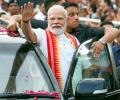
Prime Minister Narendra Modi is set to inaugurate and lay the foundation stones for various development projects worth thousands of crores in Manipur, marking his first visit since ethnic violence broke out in the state. The visit includes interaction with internally displaced persons and the launch of infrastructure projects across multiple sectors.

Two years after ethnic violence erupted in Manipur, thousands of Internally Displaced Persons (IDPs) continue to live in overcrowded camps, struggling to rebuild their lives and facing an uncertain future. Despite the sacking of the Chief Minister and the imposition of President's rule, peace remains a distant hope. While hill-based Kukis demand a separate administration, Meiteis seek implementation of the National Register of Citizens (NRC) and deportation of those they consider illegal immigrants. The IDPs, grappling with severe psychological distress, feel forgotten by the government and are forced to depend on the mercy of others for basic needs.
India ranked second in number of international students enrolling themselves for courses in Australia.
Australia's largest international student recruiter, IDP Education Pty Ltd (IDP), has said that the number of Indian student visas has crashed from 8,600 a year ago to just 200 this year, suggesting that a tightening of immigration procedures and reports of alleged racial attacks against the Indian community in Australia is having a negative impact overseas.
Nearly 1.7 lakh Tamil Internally Displaced Persons have been resettled in their native places, a minister has said, adding that the process of rehabilitation is being hampered by the ongoing de-mining operation in the country's northern part.
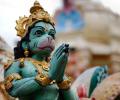
As the US gets tougher with visas, the prayers of US-bound devotees in India are getting more fervent, and their purse strings looser. Called Visa Hanuman temples (there are half a dozen all over India), some of them ask for a 'fee'.

'Students are taking a keen interest in a hybrid model, where they start classes online and then complete the course on campus.'

Supreme Court judge, Justice B R Gavai, expressed hope that the "current difficult phase" in ethnic strife-torn Manipur will be over soon with the assistance of the executive, legislature and judiciary and the state will prosper like the rest of the country. Justice Gavai, who led a delegation of Supreme Court judges that visited Manipur, called upon the people of the state to work together to restore peace and harmony. He also urged the people of the state to work together to restore peace and normalcy, and lauded the natural beauty he witnessed while travelling from Imphal to Churachandpur. He expressed delight in noting that training programmes were being imparted at the relief camps, and thanked the Chief Justice of Manipur High Court and the district legal services authority for their efforts. Justice Gavai also stressed the need for readmission of students who had to drop out of school due to the conflict and called upon the educational institutions and the public to ensure all students complete their education.
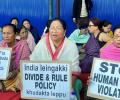
Fresh clashes broke out between people belonging to Zomi and Hmar tribes in Manipur's Churachandpur district, hours after a peace settlement was reached between the apex bodies of the two communities. The Zomi Students' Federation imposed a shutdown in the district after a group of men tried to take down a flag of a Zomi militant outfit. Several persons were injured in the clashes. Meanwhile, MLAs and tribal organisations appealed for peace, urging the administration to take necessary measures to restore law and order.

While most universities and colleges are genuine about what they offer, applicants need to verify the claims to check for authenticity and red flags if any, alerts Piyush Kumar, regional director, (South Asia), IDP Education, an overseas education consultancy.

Students who have received admission to foreign universities are struggling with unexpected delays, additional living costs and scarcity of vaccine supplies.

'What we need from the civilian and military authorities are clear strategies rather than an emotional decision to hang terrorists on death row.'

Imagine being a part of a country, but being discriminated against by the majority community and atrocities being committed against you by the state. This is the deplorable conditions that the Rohingyas of Myanmar live in where they are cut off from their livelihoods and sources of income, unable to access markets, hospitals and schools, and have little or no access to relief aid. In order to understand the situation and the genesis of the tragedy unfolding, Rediff.com's Archana Masih speaks to Ambassador Vijay Nambiar, the United Nations' Chef de Cabinet (Chief of Staff), who had served a long stint with the UN in New York on the issue.
